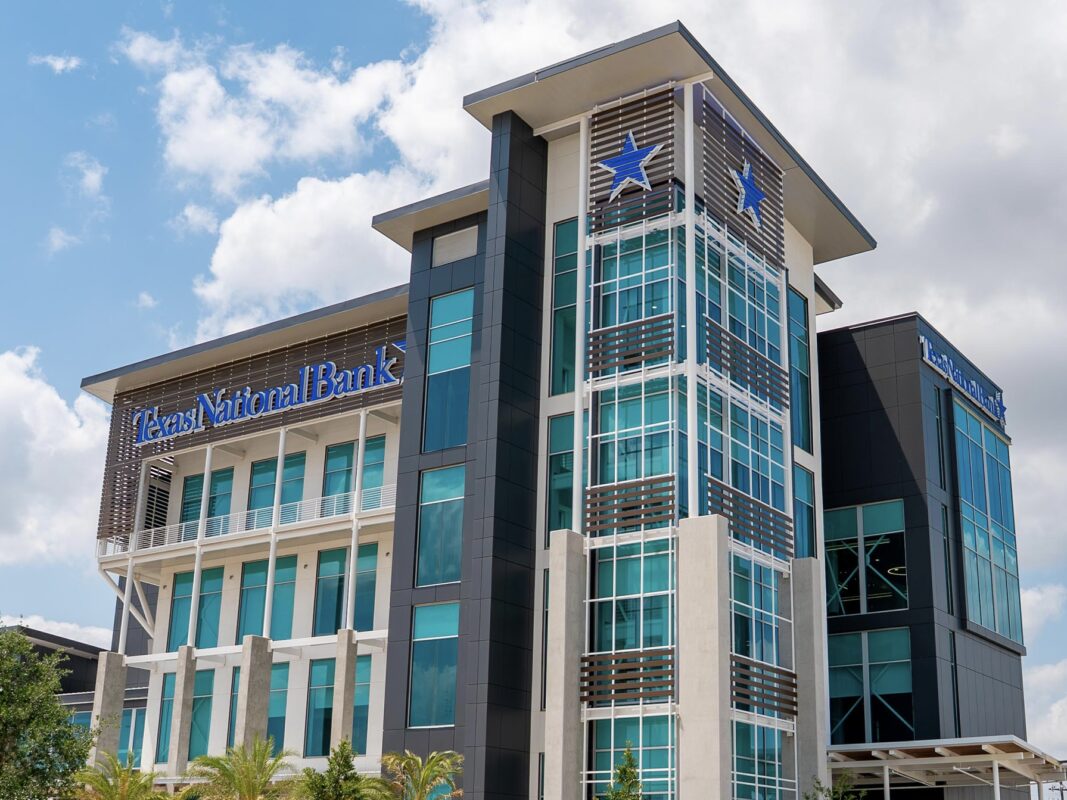
For the past few years, McAllen-based Texas National Bank has been strategically building a model to improve generational wealth in the Rio Grande Valley, and the organization is expected to be recognized nationally at an upcoming conference for Community Development Financial Institutions in Chicago.
Most of the bank’s innovative efforts were kick-started by federal funding from the U.S. Treasury’s Emergency Capital Investment Program, which provided $8.5 billion across 175 financial institutions nationwide during the height of the COVID-19 economic downturn.
Texas National Bank was not the only Valley financial institution to access those funds, but it secured $109 million through the program in 2022 as a minority-owned institution. It’s one of 30 Hispanic-American-owned banks in the country.

“When you get that capital, there is what’s called institutional leverage that you can have by a factor between 8 and 10x,” said Saurabh Narain, president and CEO of the National Community Investment Fund, a Chicago-based social impact investor and Community Development Financial Institution. “So that $109 million can become somewhere between $800 million and $1 billion more of deployable capital.”
What Texas National Bank did was introduce financial products to reduce high-interest debt, offer alternative mortgages to individuals without Social Security numbers, support higher education attainment, build affordable housing with down payment assistance, and launch a down payment assistance program for small business owners.
All of those efforts combined are meant to contribute to building generational wealth in the Rio Grande Valley.
“Generational wealth doesn’t just happen with any one segment. We believe that socioeconomic change happens via education, so we started with that,” said Joe Quiroga, president of Texas National Bank.
In 2023, the bank created the TNB Foundation, which supports students through scholarships, affordable housing, and small business lending. In May, the TNB Foundation awarded 12 high school students about $50,000 each a full-ride scholarship to college after receiving more than 2,000 applications.
To reduce high-interest debt and predatory lending in the Valley, Texas National Bank created a payday loan alternative called Cash Please. Qualified customers can borrow up to $1,500 from the bank based on their regular paycheck deposit history to access cash before payday.
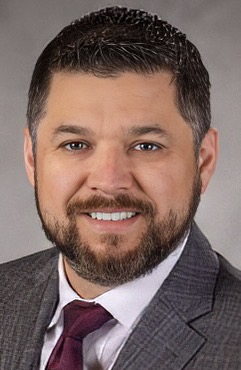
“Payday lending is a huge problem in the Rio Grande Valley. The average payday lender in Texas, specifically in our area, charges a 552% APR [annual percentage rate],” Quiroga said. “It’s just an absurd amount of money between the fees and the interest rate that are charged, so we came out with a product and said we’re not going to charge any fees, and we don’t make any money off it, 17% interest is like $32 on a $1,000 loan, but it’s a product that’s needed and we don’t do a credit check. As long as you can pay it back, you can get another one. It’s a loss- leader for us, but we’re trying to combat the issues in our community by helping establish credit and build good credit; that’s one way to do it.”
In 2020, the bank helped create the Del Valle Community Development Corporation, which builds affordable single-family homes. For example, there were several brand-new, three-bedroom, two-bath homes built by Del Valle CDC that sold for about $170,000 each across the cities of San Juan, Donna, Mercedes, Weslaco, and Edinburg.
“There’s a lot of pride in homeownership, and specifically, for first-time homebuyers, the cost to go into a home, between closing costs and a down payment, is huge. So we took matters into our own hands, and we’re building homes in our area and developing a subdivision of strictly affordable homes,” Quiroga said. “We’re taking all the profit out of it, and we help with down payment assistance so people are walking in on day one with $70,000 to $80,000 worth of equity. And that’s our way of combating affordable housing issues in our area.”
To support small businesses with startup costs, such as a landscaper looking to purchase $50,000 in equipment, the down payment is a barrier because the individual often does not have collateral or access to up-front money.
Plus, the bank’s traditional loan products don’t quite fit new entrepreneurs who would need to put 30% down, or $15,000, on a $50,000 loan. Instead, the entrepreneur can seek a small-business down payment assistance loan from the TNB Foundation and use that to meet the bank’s down payment requirement.
“So the bank has a conforming loan, we got our down payment, and the [business owner] pays back the foundation at a very minimal amount of money over the long haul. That’s how you start a successful business, how you assimilate people, and how you grow [generational wealth for] families,” Quiroga said.
There’s one financial product that enables individuals without a Social Security number to access the home mortgage market, introduced to meet a need in the community across the Valley, but has become less attainable due to strategic changes under President Donald Trump.
The ITIN Mortgage product enables individuals with an Individual Taxpayer Identification Number, rather than a Social Security number, who are often not U.S. citizens, to access homeownership.
“Many people in South Texas may not have all the documentation that is needed by Freddie Mac and Fannie Mae. So the ITIN mortgage system really grew to help those immigrants; [the bank] has been responsive to the needs of the local community,” said Narain, the National Community Investment Fund CEO.
Even some funding for the CDFI networks nationwide was temporarily frozen during the Trump administration and categorized as a diversity, equity, and inclusion effort, something Trump has deprioritized and attempted to eliminate from the federal government’s funding models through executive orders.
“Unfortunately, [the ITIN mortgage] has become a very touchy subject, but we have been delivering services to the community, and they needed those types of loans,” Quiroga said. “Now, with the administration and some of the stances they have taken, it’s become really difficult to bank that sort of clientele. But regardless, we, as a CDFI, draw a lot of strength from the collective.”
Narain echoed that sentiment about the longevity of the financial network despite changes in policy.
“Our long-term institutions will find a way of helping the local community, and this happens despite any politics,” Narain said. “I believe that institutions like Texas National Bank, NCIF, and CDFIs are resilient enough to continue supporting their local community. I don’t think that’s an issue from our perspective.”

Kristen Mosbrucker-Garza
Reporter
Kristen Mosbrucker-Garza is a versatile multimedia news reporter who lives and works along the Texas-Mexico border in Hidalgo County. Mosbrucker-Garza is a news reporter for the Rio Grande Valley Business Journal. During her career she's worked for the McAllen Monitor, San Antonio Business Journal, The Advocate Newspaper in Louisiana, Phoenix New Times, and public media outlets in Baltimore and Philadelphia.
Most Read
- USMCA won’t die in 2026 — but it’s entering a new, uncertain phase, RGV trade expert says
- New $1.6M food hall aims to transform downtown Edinburg with dining, retail and events
- Vice President J.D. Vance cancels South Texas visit ahead of Port of Brownsville event
- South Texas builders say ICE raids are back, mourn death of slain construction worker
- Economic progress at the Port of Brownsville draws vice president’s visit
- Crunch Fitness plans a new 50,000-square-foot Harlingen location
Get the latest business news delivered to your inbox every morning for free.
Try 30 Days Free!
Get full access to award-winning journalism covering business, real estate, health care, economic trends, and the people shaping the Rio Grande Valley.
30 Days Free!
$9.95/month
Limited time offer
Subscription renews after your 30 day free trial at $9.95/mo.
Included Benefits
- Unlimited access to all articles
- Daily business news and analysis
- Subscriber-only content and features
Stories That Matter
- USMCA won’t die in 2026 — but it’s entering a new, uncertain phase, RGV trade expert says
- Brownsville advances as finalist for potential professional soccer team
- Competition for Rio Grande Valley workers is heating up
- Construction workers make up nearly 1 in 3 unemployment claims in three RGV counties
- Social Fest launches RGV Creator of the Year award
- Mexican tech company chooses McAllen as launchpad for U.S. expansion
- San Juan Acura dealership sold, will become Lumos Acura
- Brownsville reschedules vote on SpaceX disannexation request
- Twin Peaks is coming to Brownsville and South Padre Island
- Cameron County wants input on a highway that could lead to SPI’s second causeway
- Texas commits $192M to widen the only highway to Starbase